
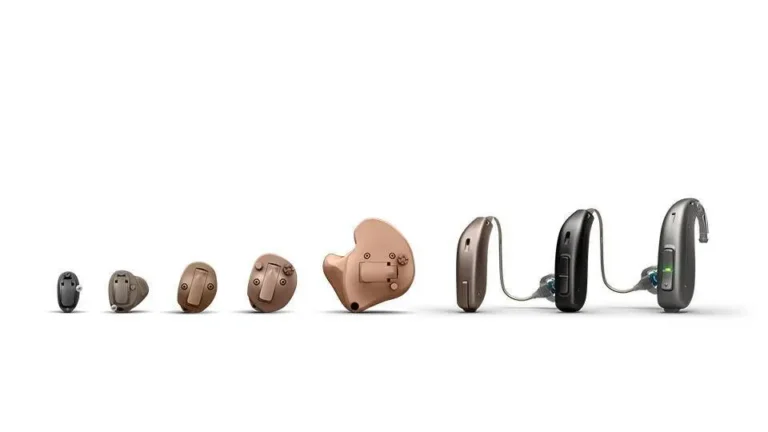
Which Oticon model actually fits your life? Here’s how the current lineup breaks down, model by model.
Oticon now sells four distinct hearing aids in the United States, and each one solves a different problem. Zeal is built for people who want almost nothing visible in or around their ear. Intent is the flagship, with sensors that track how you’re actually listening in the moment. Own SI is a fully custom in-the-ear device for people who don’t want anything sitting behind the ear at all. Jet PX brings Oticon’s newer sound processing down to a lower price point.
If you’ve read our full Oticon hearing aids overview, you’ve seen the feature lists for each model. This guide is different: it’s built to help you narrow down which one is worth demoing first, based on how you actually live, what you’re willing to spend, and what’s bothered you about hearing aids in the past.
The Oticon Lineup at a Glance
| Model | Style | Chip / Platform | Best For | Price Tier |
|---|---|---|---|---|
| Oticon Zeal | Nearly invisible, in-the-ear | Sirius chip | Discretion above all else | Premium |
| Oticon Intent | miniRITE (behind-the-ear, thin wire) | Sirius chip, 4D Sensor | Active lifestyles, group conversation | Premium |
| Oticon Own SI | Custom in-the-ear (IIC/CIC and more) | Sirius platform | Custom comfort, tinnitus support | Premium |
| Oticon Jet PX | BTE and RIC, multiple sizes | Polaris platform | Value-conscious buyers, higher power needs | Mid-range |
Oticon Zeal: For People Who Don’t Want Anyone to Know

Oticon Zeal — nearly invisible in-the-ear hearing aid with companion phone app
Zeal is Oticon’s newest form factor, introduced to the U.S. market in early 2026. It sits entirely within the ear canal, with no piece resting behind or above the ear, which means it works with glasses, hats, and helmets without any interference.
What makes Zeal notable isn’t just the size. It runs on the same Sirius chip and BrainHearing technology as Intent, so it isn’t a stripped-down “small” option, it’s a full AI sound processor built into a smaller shell. Oticon used a manufacturing process borrowed from the medical device industry to seal the unit, giving it an IP68 moisture rating that’s unusually strong for a device this size.
Consider Zeal if: you’ve avoided hearing aids in the past because you didn’t want anything visible, you wear glasses, sunglasses, or head coverings regularly, or you want rechargeable power without a behind-the-ear component. Most patients can be fit with a dome in a single visit, though custom micro-earmolds are available for a more sealed fit.
Oticon Intent: The Flagship, Built Around Sensors
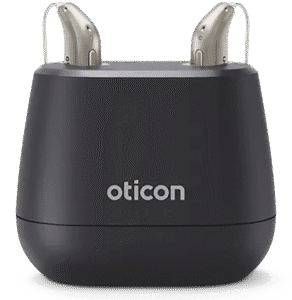
Oticon Intent — miniRITE hearing aid with 4D Sensor technology
Intent is still Oticon’s most advanced hearing aid overall, and it’s the one most people mean when they ask about “the newest Oticon.” Its defining feature is 4D Sensor technology, four separate inputs that work together in real time:
- Sound scene sensing: reads the full 360-degree environment around you, not just what’s in front of you
- Head movement sensing: tracks whether you’re turning to follow a conversation, and adjusts focus accordingly
- Body movement sensing: anticipates when you need broader spatial awareness, such as walking through a crowd
- Conversation activity sensing: detects whether you’re actively speaking or listening, and prioritizes speech processing when you are
These sensors feed into Deep Neural Network 2.0 and MoreSound Intelligence 3.0, Oticon’s sound processing engines, so the device is constantly reacting to what you’re doing rather than applying one static setting. Intent also charges fast: roughly a full day’s use from a 2-hour charge, with a 15-minute quick charge in a pinch, and about 8 hours of use from just 30 minutes on the go.
Consider Intent if: you spend a lot of time in group settings, restaurants, or meetings where following a specific speaker in noise is the main challenge, or you want the most current sensor and AI technology Oticon offers in a behind-the-ear style.
Oticon Own SI: Fully Custom, Fully Concealed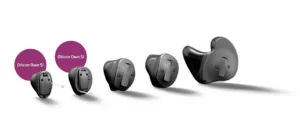
Oticon Own SI — custom in-the-ear hearing aid
Own SI takes a different approach entirely. Instead of a behind-the-ear piece with a receiver in the canal, it’s custom-molded to your ear, available in styles ranging from invisible-in-canal to completely-in-canal. Nothing is standardized; the shell is built from an impression of your own ear.
It runs on the same Sirius platform and DNN 2.0 processing as Intent and Zeal, trained on roughly 12 million real-world sound scenes, so the sound quality doesn’t take a back seat to the custom fit. Own SI also includes Tinnitus SoundSupport, built-in relief sounds for patients managing ringing or buzzing alongside hearing loss.
Consider Own SI if: comfort and an exact anatomical fit matter more to you than the latest sensor features, you deal with tinnitus and want relief sounds built into the device itself, or you’ve had trouble with behind-the-ear pieces slipping or feeling bulky.
Oticon Jet PX: Oticon Technology at a More Accessible Price
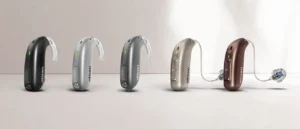
Oticon Jet PX — available in multiple styles and colors
Jet PX runs on Oticon’s Polaris platform rather than Sirius, which puts it a tier below Zeal, Intent, and Own SI in raw processing power, but it still includes real feedback management, clear and balanced sound processing, and support for Bluetooth accessories. It also comes in the widest range of physical styles, both behind-the-ear and receiver-in-canal, in rechargeable and traditional battery versions, which makes it a practical option for patients with more severe hearing loss who need a more powerful BTE.
Consider Jet PX if: budget is a primary factor, you need a higher-power BTE style for more significant hearing loss, or you want dependable Oticon performance without paying for the top-tier sensor suite.
How to Actually Choose Between Them
In our experience fitting patients across Westchester County, the decision usually comes down to three questions more than anything on a spec sheet:
- How visible are you comfortable with? If the answer is “not at all,” Zeal or Own SI move to the front of the list. If visibility isn’t a concern, Intent and Jet PX open up more.
- Where does your hearing loss actually challenge you? Restaurants and group conversations point toward Intent’s sensor suite. Steady ringing or tinnitus points toward Own SI. More severe loss that needs extra power points toward Jet PX.
- What’s the budget, realistically? Zeal, Intent, and Own SI sit in the premium tier. Jet PX is built to deliver real Oticon technology without the premium price. We walk through financing and insurance options during your first visit, so cost doesn’t have to be a guessing game.
None of this replaces an actual hearing aid evaluation. The degree and shape of your hearing loss narrows the list before lifestyle preferences even come into play, which is why we always start with testing rather than a product pitch.
Frequently Asked Questions
What is the newest Oticon hearing aid?
Oticon Zeal is the newest model, introduced to the U.S. market in early 2026. It’s a nearly invisible in-the-ear design that uses the same Sirius chip and BrainHearing technology as the Intent.
Is Oticon Intent better than Oticon Zeal?
Neither is strictly “better,” they solve different problems. Intent’s 4D Sensor technology is built for tracking movement and conversation activity across a room, which suits active, social lifestyles. Zeal prioritizes discretion in a nearly invisible in-the-ear shell while running the same underlying sound processing. The right choice depends on how visible you’re willing to go versus how much you value the sensor-driven adjustments.
Which Oticon hearing aid is best for tinnitus?
Oticon Own SI includes Tinnitus SoundSupport, built-in relief sounds designed to help manage tinnitus symptoms alongside standard amplification. It’s worth mentioning tinnitus during your evaluation regardless of which model you’re considering, since several Oticon devices offer some level of sound support.
How much do Oticon hearing aids cost?
Pricing depends on the model and technology level. Zeal, Intent, and Own SI sit in the premium tier, while Jet PX is positioned as a more accessible option. We provide an exact quote after your evaluation, and can walk through financing and insurance coverage at that time.
Can I try more than one Oticon model before deciding?
Yes. We offer hands-on demos of Oticon’s current lineup so you can compare sound quality and fit directly rather than choosing from a spec sheet alone.
See the Difference for Yourself
Reading about sensors and chipsets only goes so far, the real test is how a device sounds in your ear, in your daily environments. If you’d like to compare Zeal, Intent, Own SI, or Jet PX side by side, we offer personalized fittings and demos at our White Plains office.
Schedule Your Oticon Hearing Aid Demo & Fitting
Related reading: What Makes Oticon Hearing Aids Different from Other Brands? and Hearing Aid Styles Explained: BTE, RIC, ITC, CIC, and IIC.