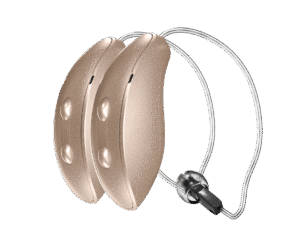
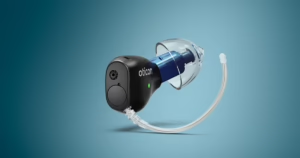
When you start researchinghearing aids, one of the first things you will notice is that every device looks a little different. Some sit behind the ear, some tuck inside the canal, and some are nearly impossible to see. These differences are not cosmetic choices. The style of a hearing aid directly affects how well it performs for your specific hearing loss, how comfortable it is to wear all day, whether you can physically manage it, and what technology features it can support.
This guide covers every major hearing aid style in plain language: behind-the-ear (BTE), receiver-in-canal (RIC), in-the-canal (ITC), completely-in-canal (CIC), and invisible-in-canal (IIC). We will explain what each style does well, where it falls short, and how factors like dexterity, lifestyle, and fitting precision all play into the decision. By the end, you will have a clear framework for the conversation you need to have withDr. Emily Esca at yourhearing aid evaluation.
Why Style Matters More Than Most Patients Expect
Style determines far more than appearance. It affects microphone placement, which shapes how sound is captured and processed. It affects battery size and rechargeability. It determines whether Bluetooth streaming and directional microphones are even possible. And it determines how manageable the device is to handle every single day.
Research consistently shows that 16 to 30 percent of adults who own hearing aids do not regularly wear them. The most common reasons are poor comfort, difficulty handling small devices, feedback, and the sensation of being plugged up. Every one of those factors is shaped directly by style choice. Getting the style right from the start, with a professionalhearing aid fitting and honest guidance from an audiologist, is one of the most reliable ways to avoid becoming part of that statistic.
The Major Hearing Aid Styles
Behind-the-Ear (BTE)
The BTE houses all components in a case behind the outer ear, connected via tubing to a custom earmold in the ear canal. It is the most powerful and durable style available, and the most forgiving for patients with limited dexterity because the device body is large enough to grip and manage confidently.
Best for: Severe to profound hearing loss, children, patients who need maximum power, and anyone with dexterity limitations. Hearing loss range: mild through profound.
Key advantages: Longest battery life, widest hearing loss range, easiest to handle, supports Bluetooth and rechargeable options, custom earmold can be replaced without replacing the device.
Trade-offs: Most visible style. Traditional closed earmold can cause occlusion (a plugged-up sensation) in patients with normal low-frequency hearing. Today’s BTE devices fromPhonak andOticon are considerably slimmer than older generations and support full AI processing and Bluetooth streaming.
RIC hearing aids are the most widely prescribed style in the world, accounting for roughly 80 percent of hearing aids sold. A thin wire moves the speaker (receiver) from the main body behind the ear into the ear canal, producing a smaller device, more natural sound, and less occlusion than a traditional BTE with a closed earmold.
Best for: Mild to severe hearing loss, first-time users, patients who want full Bluetooth and rechargeable features, and active adults seeking discretion without a fully custom in-canal device. Hearing loss range: mild through severe, and some profound cases with an upgraded receiver.
Key advantages: Discreet, natural sound quality, full feature support including AI processing and Bluetooth streaming, receiver can often be replaced in-office without replacing the whole device.
Trade-offs: The receiver wire is a wear point that may need periodic replacement. Dexterity demands are moderate. Open-fit domes that make RICs comfortable can reduce low-frequency amplification for patients who need it. All five brands we carry offer strong RIC platforms.Widex,Signia,Starkey,Oticon, andPhonak all offer RIC devices with distinct processing approaches and feature sets.
In-the-Canal (ITC)
ITC hearing aids are custom-molded to fit in the lower portion of the outer ear bowl and the opening of the ear canal. Larger than CIC and IIC devices, they support more features while remaining relatively discreet.
Best for: Mild to moderate hearing loss, patients who want a custom device with directional microphone support, and those who want a lower-profile option without going fully deep-canal. Hearing loss range: mild through moderate.
Key advantages: Custom fit, longer battery life than smaller canal styles, directional microphone support on many models, some volume and program controls on the device.
Trade-offs: Not suitable for severe or profound loss. Handling demands are higher than BTE or RIC. Canal placement means higher exposure to earwax and moisture, requiring consistent daily cleaning. Limited Bluetooth options.
Completely-in-Canal (CIC)
CIC hearing aids are custom-molded to fit entirely inside the ear canal, with only a small removal tab visible at the opening. They sit deeper than ITC devices and are significantly more discreet.
Best for: Mild to moderate hearing loss, adults who prioritize discretion and have good manual dexterity, and patients with healthy ear canals. Hearing loss range: mild through moderate.
Key advantages: Very discreet, natural high-frequency sound quality from canal placement, reduced wind noise, lower occlusion effect than ITE styles.
Trade-offs: Frequent small battery changes required, rechargeability rarely available, no directional microphones on most models, high dexterity demands for daily insertion and removal, higher maintenance burden due to earwax and moisture exposure at depth.
Invisible-in-Canal (IIC)
IIC hearing aids sit past the second bend of the ear canal, making them virtually invisible from any angle. They are the most requested style from patients concerned about appearance, and the most clinically constrained style on the market.
Best for: Mild to moderate hearing loss only, adults with suitable ear canal anatomy and strong dexterity, and patients for whom cosmetic discretion is the primary driver. Hearing loss range: mild through moderate only.
Key advantages: Virtually invisible, reduced occlusion effect, natural high-frequency response, good for telephone use.
Trade-offs: No Bluetooth, no rechargeable option, no manual controls, no directional microphones. Cannot accommodate severe or profound hearing loss. Approximately 15 to 20 percent of adults have ear canal anatomy that makes a precise IIC fit impractical. Very high dexterity demands. Highest maintenance and repair frequency of any style.
Quick Comparison: All Styles at a Glance
Individual models within each category vary. Dr. Esca’s recommendations based on your audiogram and evaluation always take precedence over any general chart.
Style
Hearing Loss Range
Bluetooth
Rechargeable
Visibility
BTE
Mild to Profound
Yes
Yes
Most visible
RIC / RITE
Mild to Severe
Yes
Yes
Discreet
ITC
Mild to Moderate
Some models
Rare
Low profile
CIC
Mild to Moderate
Very limited
Rarely
Very discreet
IIC
Mild to Moderate
No
No
Invisible
Style
Dexterity Demand
Noise Performance
Maintenance
Best Lifestyle Fit
BTE
Low
Excellent
Low
Active, severe loss, limited dexterity
RIC / RITE
Moderate
Excellent
Low-Mod
Most lifestyles, first-time users
ITC
Mod-High
Good
Moderate
Quieter lifestyles, discretion-focused
CIC
High
Fair
High
Mild loss, strong dexterity
IIC
Very High
Limited
Very High
Mild loss, maximum discretion
Dexterity: The Factor Most Patients Do Not Mention Until It Is a Problem
Dexterity is one of the most underestimated factors in hearing aid style selection and one of the most common reasons patients stop wearing their devices. Many people are reluctant to bring it up, either because they do not connect it to the style decision or because they feel self-conscious about it. The clinical reality is simple: a hearing aid you physically struggle to manage every morning will end up on the dresser.
Every style places different demands on your hands. Here is what that means practically:
Insertion and removal: Canal styles require precise placement in a space you cannot see. BTE and RIC devices place the main body behind the ear in a far more accessible position.
Battery management: IIC and CIC devices use size-5 batteries, roughly 5.8mm in diameter, that require steady hands and a precise pinch grip to handle. BTE and RIC devices use larger batteries or fully rechargeable cases that eliminate the task entirely.
Daily cleaning: Smaller canal devices require removing earwax from internal openings with small cleaning tools. The smaller the device, the more precise the cleaning demands.
Device controls: Small buttons on ITC or CIC devices require fine motor precision. BTE and RIC devices can often be controlled via smartphone app, removing the need to handle the device at all for routine adjustments.
Conditions that commonly affect dexterity include arthritis, Parkinson’s disease, essential tremor, peripheral neuropathy, post-stroke motor impairment, and general age-related reduction in hand strength. None of these disqualify a patient from wearing hearing aids. However, they do help to inform which style will be practical to wear every day. For most patients with dexterity concerns, a rechargeable RIC or BTE device is the most sustainable option. Dexterity is part of the evaluation conversation at Listen Hear Diagnostics, not an afterthought. If this applies to you, your hearing aid evaluation appointment is the right place to raise it.
Matching Style to Your Lifestyle
Your audiogram tells us what your ears need. Your lifestyle tells us what your hearing aids need to do in the real world. The right style sits at the intersection of both.
Listening environments: If you regularly attend meetings, dine out, or spend time in noisy social settings, directional microphone technology is a high priority. Directional microphones require physical space on the device. IIC and most CIC models cannot support them. RIC and BTE styles consistently outperform canal styles in complex noise environments.
Bluetooth and smartphone use: Seamless streaming for phone calls, music, and television is only reliably available in BTE and RIC styles, and in some ITC devices. Custom canal styles below ITC will not support it. See ourBluetooth hearing aid options for what is currently available across brands.
Physical activity: Sweat, moisture, and variable weather are real performance factors. RIC and BTE devices with high IP ratings handle active lifestyles better than canal devices, which sit in a warm, moist environment all day with less drainage capacity.
Appearance and consistency of wear: Cosmetic concerns are legitimate. Many patients delay getting help forhearing loss specifically because of stigma around visible devices. If a smaller device is what motivates you to actually wear hearing aids every day, that has genuine clinical value. What we want to avoid is choosing a style that sacrifices directional performance, Bluetooth, or adequate power just to gain invisibility, because the resulting dissatisfaction typically leads to non-use anyway.
Why Fitting Precision Matters as Much as Style
Choosing the right style is the first half of the equation. The second half is making sure the device is fitted to your specific ear anatomy with clinical precision. This is where a meaningful gap exists between professional audiology care and over-the-counter or self-fit alternatives.
Real-ear measurement
At Listen Hear Diagnostics, everyhearing aid fitting includes real-ear measurement (REM), a clinical tool that uses a small probe microphone to measure the amplification actually reaching your eardrum and verify that it matches your prescription target. This step is skipped entirely with over-the-counter devices and is one of the most significant quality differences between a professional fitting and a retail purchase. AI features and advanced processing only perform as well as the underlying calibration. A device that has not been verified against your audiogram with REM is delivering an approximation, not a solution built for your ears.
Otoscan: 3D digital ear scanning
For custom hearing aid styles, ITC, CIC, and IIC devices all require an accurate ear impression to manufacture the device shell. Listen Hear Diagnostics uses the Otoscan, a 3D digital ear scanning system that replaces traditional silicone ear impressions with a precise, non-invasive digital model of your ear canal. The Otoscan uses safe optical technology to capture the exact shape, curvature, and elasticity of your ear in real time, producing a high-resolution 3D scan that is transmitted directly to the manufacturer digitally.
Traditional silicone impressions are technique-dependent and can miss subtle anatomical details, leading to shells that fit poorly, cause feedback, or require a remake. Manufacturer data for the Otoscan shows it reduces remake rates by 33 to 50 percent compared to traditional impression methods. For patients considering IIC or CIC styles where fit tolerances are tightest, this precision is directly consequential.
The scan also gives patients a real-time view of their own ear canal, which Dr. Esca uses to walk through the anatomy, explain how the device will sit, and discuss what factors are being accounted for in the fit. For many patients, seeing the process in real time increases both confidence in the care they are receiving and engagement with the fitting outcome. If you have had poorly fitting custom devices in the past and given up on in-canal styles as a result, an Otoscan-based fitting is worth considering.
A Note on Over-the-Counter Hearing Aids
Most OTC devices come in a single RIC-style form factor with universal ear tips. They are not calibrated to a clinical audiogram, not fitted with real-ear measurement, and not available in any custom style. There is no equivalent of the Otoscan in a self-fit process. For a detailed comparison of when OTC devices make sense and when they fall short, see our post onOTC vs. prescription hearing aids.
Frequently Asked Questions
Is RIC better than BTE?
Not inherently. RIC suits mild to severe hearing loss well and offers strong discretion. BTE is more appropriate for profound hearing loss and patients with dexterity limitations who benefit from a larger device. The right answer comes from your audiogram and lifestyle.
Are invisible hearing aids worth the tradeoffs?
For some patients, yes. If cosmetic discretion motivates consistent wear and your hearing loss is mild to moderate, an IIC can be a good clinical choice when your ear canal anatomy supports it. If getting there means giving up directional microphones, Bluetooth, or adequate power for your degree of loss, dissatisfaction and non-use are the likely outcomes.
I have arthritis. Can I still wear hearing aids?
Yes. Dexterity limitations narrow the style options but do not eliminate them. Rechargeable BTE and RIC devices are well-suited to patients with limited hand strength because they eliminate battery handling and can be controlled via app. Dr. Esca factors this into every style recommendation.
How is the Otoscan different from a traditional ear impression?
A traditional impression uses silicone material injected into the ear canal that hardens into a physical mold. The Otoscan uses non-invasive optical scanning to capture a digital 3D model without any material touching the canal. It is more precise, faster to transmit to manufacturers, and produces a meaningfully lower remake rate.
Do I need a hearing test before choosing a style?
Yes, always. Your audiogram determines which styles can physically support your hearing loss. There is no style decision to be made without it. If you have not had a recent test, ahearing test in White Plains is the starting point for everything that follows.
Ready to Find the Style That Actually Fits Your Life?
The comparison charts and general guidance in this article can frame the conversation, but they cannot replace it. Your audiogram, your ear canal anatomy, your daily routine, and your dexterity are specific to you. The right hearing aid style is determined by combining all of those factors together with someone who is actually looking at your results and listening to your life.
Dr. Emily Esca at Listen Hear Diagnostics in White Plains, NY brings clinical precision and genuine patient focus to every evaluation. From thorough hearing testing to Otoscan-assisted custom fittings and real-ear measurement verification, her process is built around getting the outcome right the first time. If you have questions about which style suits your hearing loss and lifestyle, or you are ready to move forward, Dr. Esca is ready to help.
Written/Reviewed by Dr. Emily Esca, Au.D.If you’ve shopped for hearing aids, or even just started researching, you’ve probably noticed something: most brands promise the same
Written/Reviewed by Dr. Emily Esca, Au.D.If you’ve recently been diagnosed with hearing loss, or you’re helping a loved one navigate hearing care, you’ve probably run
Written/Reviewed by Dr. Emily Esca, Au.D.If you wear hearing aids (or you’re shopping for your first pair), battery choice can feel like a small detail,
Written/Reviewed by Dr. Emily Esca, Au.D.The holidays are supposed to be joyful. But if hearing clearly in noisy environments is a struggle, a bustling dinner
Written/Reviewed by Dr. Emily Esca, Au.D.Over‑the‑counter (OTC) hearing aids are everywhere now, from pharmacies to big‑box stores and online carts. Meanwhile, prescription hearing aids keep