Understanding Tinnitus: Causes, Symptoms, and Management Options

Tinnitus affects roughly 25 million adults in the United States, making it one of the most common auditory conditions in the country. For a meaningful portion of those people, it significantly disrupts daily life. If you are hearing ringing, buzzing, hissing, or other phantom sounds that no one else can detect, you are not alone and there are proven strategies to help manage it.

Tinnitus Specialist Westchester

At Listen Hear Diagnostics in White Plains, NY, we serve patients throughout Westchester County, including White Plains, Scarsdale, Tarrytown, and surrounding communities. This page is intended to help you understand what tinnitus is, what causes it, and what the broader treatment landscape looks like. Where hearing loss is a contributing factor, we offer comprehensive hearing evaluations and hearing aids with built-in tinnitus management features. We also offer LACE AI Pro auditory training as a complementary tool for patients managing the communication challenges that often accompany tinnitus.

What is Tinnitus?

Tinnitus is the perception of sound in one or both ears, or in the head, without any external acoustic source. It is not a disease itself but a symptom, most often indicating that something has changed in the auditory system. The sounds people describe vary widely and can include:

  • Ringing
  • Buzzing or humming
  • Hissing or static
  • Clicking or pulsing
  • Roaring or low-frequency tones

Tinnitus can be constant or intermittent, affect one ear or both, and range from a minor background nuisance to a condition severe enough to interfere with sleep, concentration, and emotional well-being.

Common Causes of Tinnitus

Tinnitus has multiple potential causes, and in some cases more than one factor is involved. Understanding the source helps guide the most effective management approach.

Noise-Induced Hearing Loss

Prolonged or sudden exposure to loud sounds can damage the hair cells in the inner ear that transmit sound signals to the brain. When those cells are damaged, the brain may compensate by generating internal sound, which manifests as tinnitus.

Age-Related Hearing Loss (Presbycusis)

The natural decline in hearing that occurs with aging is one of the most common causes of tinnitus in adults over 60. When the auditory system receives less external input, the brain can begin filling in the gaps.

Earwax Blockage

A buildup of cerumen (earwax) can obstruct the ear canal, cause temporary hearing loss, and trigger or worsen tinnitus. This is one of the most straightforward causes to address.

Medications (Ototoxic Drugs)

Certain medications are known to cause or worsen tinnitus as a side effect. These include high-dose aspirin, some antibiotics, diuretics, and certain cancer treatments. If you suspect a medication is a contributing factor, speak with the prescribing physician.

Meniere's Disease

Meniere's is an inner ear disorder characterized by excess fluid, fluctuating hearing loss, vertigo, and tinnitus. Management typically requires coordination with an ear, nose, and throat (ENT) specialist.

Head or Neck Injuries

Trauma to the head, neck, or jaw (including TMJ disorders) can affect the inner ear or auditory nerve pathways and trigger tinnitus.

Cardiovascular Issues

In some cases, tinnitus is pulsatile, meaning it beats in rhythm with the heart. This type warrants medical evaluation, as it can be related to blood vessel conditions.

How Tinnitus Affects Daily Life

For many people, the challenge of tinnitus extends beyond the sound itself. Persistent tinnitus is closely associated with:

  • Difficulty falling or staying asleep
  • Reduced concentration and cognitive fatigue
  • Heightened anxiety or irritability
  • Withdrawal from social situations or conversations
  • Depression and reduced quality of life in severe cases

Research in audiology and hearing science consistently shows that the loudness of tinnitus does not reliably predict how distressing a patient finds it. The emotional and psychological burden is often more disabling than the perceived volume of the sound itself. Effective management addresses both dimensions.

The Tinnitus Treatment Landscape: What the Evidence Shows

There is no single treatment that eliminates tinnitus for all patients, but multiple evidence-based approaches have demonstrated meaningful reductions in tinnitus distress. The most established options include:

Hearing Aids with Sound Therapy Features

For patients with co-occurring hearing loss, hearing aids are among the most effective tinnitus management tools available. When the auditory system receives more external sound input, the contrast between external sound and internal tinnitus diminishes, reducing how prominently the tinnitus is perceived.

Many modern hearing aids also include dedicated tinnitus masking programs that generate low-level broadband noise, ocean sounds, or other soothing tones directly in the ear canal. These features can provide meaningful relief throughout the day without any additional device.

Several manufacturers that Listen Hear Diagnostics works with offer hearing aids with built-in tinnitus management features, including Oticon, Widex, Starkey, Signia, and Phonak. During a hearing aid evaluation, Dr. Esca will assess your hearing profile and tinnitus characteristics to recommend the device best suited to your situation.

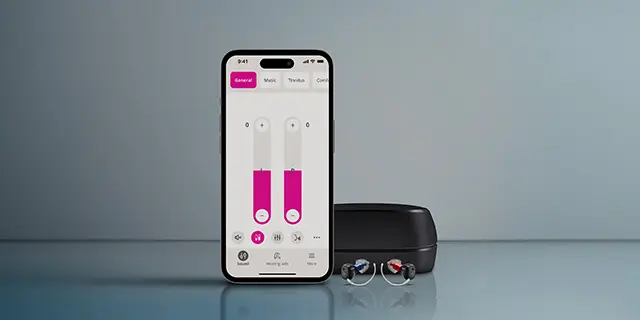
The Oticon Zeal hearing aid with the paired phone app to enhance the quality of what you hear.

Sound Therapy

Sound therapy uses external audio, delivered through hearing aids, tabletop sound machines, or apps, to reduce the contrast between the quiet environment and the perceived tinnitus. The goal is habituation: training the brain to move tinnitus into the background over time rather than treating it as a threat signal.

Common sound therapy approaches include broadband white or pink noise, nature sounds, and notched music therapy. Sound therapy is often most effective when combined with counseling or hearing aids, rather than used in isolation.

Three phones displaying some of the features from the Lace AI Pro program.

Lace AI: Auditory Training to Support Tinnitus Management

Tinnitus often co-occurs with difficulty understanding speech, particularly in noisy environments. LACE AI Pro (Listening and Communication Enhancement) is a clinically developed auditory training program that strengthens the brain’s ability to process and interpret sound. By improving auditory processing, LACE AI can reduce the cognitive effort required to follow conversations, which in turn lowers the stress and fatigue that often amplify tinnitus perception. It is used alongside hearing aids as a complementary approach to comprehensive hearing health.

Tinnitus Retraining Therapy (TRT)

TRT is a structured, long-term protocol that combines sound therapy with directive counseling to teach the brain to reclassify tinnitus as a neutral, non-threatening signal. The full TRT protocol typically spans 12 to 24 months, and most patients who complete it experience a significant reduction in tinnitus awareness and distress. TRT requires a trained clinician and consistent follow-through from the patient.

While Listen Hear Diagnostics does not currently offer formal TRT, we can provide information and discuss referral options if your situation warrants this level of structured intervention.

Cognitive Behavioral Therapy (CBT)

CBT for tinnitus is a psychological intervention that targets the negative thought patterns and emotional responses that make tinnitus distressing. According to the American Tinnitus Association, CBT is generally considered the approach with the strongest research evidence for tinnitus management, based primarily on randomized controlled trials. Clinical studies show it can significantly reduce tinnitus-related disability and improve quality of life, even when the perceived loudness of tinnitus remains unchanged.

CBT for tinnitus is provided by trained psychologists or licensed therapists. Listen Hear Diagnostics does not provide CBT directly, but we encourage patients experiencing significant anxiety, depression, or sleep disruption related to tinnitus to seek this support in addition to audiologic care.

How Listen Hear Diagnostics Can Help

At Listen Hear Diagnostics, our focus is on identifying the auditory factors that may be contributing to your tinnitus and providing the hearing care tools best suited to your situation. 

If hearing loss is a contributing factor, Dr. Emily Esca can:

  • Perform a comprehensive hearing evaluation to identify any underlying hearing loss contributing to your tinnitus
  • Discuss whether hearing aids with tinnitus management features are appropriate for your situation
  • Introduce you to LACE AI Pro auditory training if it aligns with your hearing profile
  • Provide education on sound therapy strategies you can implement at home
  • Recommend the appropriate specialist including an ENT, a TRT specialist, or therapist if your symptoms fall outside the scope of audiologic care

Frequently Asked Questions About Tinnitus

Is tinnitus permanent?

Tinnitus caused by temporary factors such as earwax blockage, a single loud noise event, or a short-term medication can resolve once the underlying cause is addressed. Tinnitus associated with permanent hearing loss is generally chronic, but it can be effectively managed to the point where it no longer significantly affects daily life.

Can hearing aids really help tinnitus?

Yes, particularly for patients who also have measurable hearing loss. By amplifying external sound and reducing the auditory deprivation that contributes to tinnitus perception, hearing aids address one of the primary mechanisms driving the condition. Many devices also include built-in tinnitus masking programs for additional relief.

Is there a cure for tinnitus?

As of now, there is no FDA-approved cure for chronic tinnitus. Research is ongoing, and several pharmacological and neurostimulation approaches are in clinical trials. In the meantime, evidence-based management strategies can reduce tinnitus distress substantially for most patients.

When should I see a doctor rather than an audiologist?

You should seek medical evaluation from a physician or ENT specialist if your tinnitus is pulsatile (beats in time with your heartbeat), occurs only in one ear, comes on suddenly, or is accompanied by vertigo, sudden hearing loss, or neurological symptoms. These presentations can indicate conditions that require medical rather than audiologic management.

What kind of doctor should I see for tinnitus?

That depends on your symptoms. If your tinnitus is accompanied by sudden hearing loss, vertigo, or is pulsatile, start with your primary care physician or an ENT specialist. For tinnitus associated with hearing loss, an audiologist can evaluate your hearing and discuss whether hearing aids or sound therapy are appropriate. If anxiety, depression, or sleep disruption are significant factors, a psychologist or therapist trained in CBT for tinnitus is worth seeking out.

Dr. Esca is a wonderful audiologist. Every visit is a pleasure. Dr. Esca is very attentive and helpful. She always shows a lot of concern and compassion. On top of that she is extremely smart and keeps us well informed. I was very lucky to have found her since I was so hesitated to get hearing aids. I highly recommend her.

JC

Dr Esca is excellent. She is very knowledgeable and helpful addressing all my concerns ensuring that my hearing needs are met. I highly recommend her!

ToniAnn Sanin

Really good experience working with Dr. Esca. She was patient and kind and answered all of my questions. I highly recommend Listen Hear Diagnostics!

Keith S.

I have been swing Dr Esca for a few years and have found her great. She has a beautiful new office and up to date equipment. She is knowledgeable, attentive, explains what she is doing and follows up as needed. I have no reason to go anywhere else, and feel the nearly 1 hour trip each way is worthwhile. As an alternative, she offers remote hearing aid adjustments as well.

Peter K. (PRK M.D.)