If you’ve caught yourself thinking, “I hear fine… people just don’t speak clearly anymore,” there’s a good chance your ears are trying to tell you something.
Hearing changes gradually for most adults, which is why so many people wait years longer than they should to get tested. In reality, if you’re Googling “hearing test near me,” your instincts are already doing some of the work.
At Listen Hear Diagnostics in White Plains, NY, Dr. Emily Esca, Au.D., provides comprehensive hearing tests, hearing aid fittings, and ongoing care for adults throughout Westchester county. This guide walks through nine clear signs it’s time to schedule a hearing test, and what to expect when you do.
1. Are You Saying “What?” More Than You Used To?
One of the most common early signs of hearing loss is simple: you keep asking people to repeat themselves.
It might show up like this:
You miss parts of the conversation, especially if someone is speaking quickly.
You feel like you’re guessing words from context.
You find yourself smiling and nodding, hoping you heard correctly.
This isn’t about intelligence or attention. It’s usually because your ears are no longer picking up certain sounds clearly, especially consonants like s, f, th, and k that carry a lot of speech detail. Your brain fills in the gaps, but that constant effort is tiring.
If this sounds familiar, it’s a strong sign it’s time to schedule a hearing test in White Plains with an audiologist who can measure exactly what you’re missing and why.
2. Do Noisy Restaurants and Group Settings Feel Exhausting?
If a dinner out used to be fun and now feels like work, pay attention.
People with early hearing loss often say:
“I can hear people talking, but I can’t understand them in a crowd.”
“Background noise drowns everything out.”
“I leave social events mentally drained.”
This happens because your ears struggle to separate speech from noise. Instead of relaxing into the conversation, your brain is constantly trying to decode muffled sound. That listening fatigue is a classic sign of hearing changes.
Modern hearing aids are designed specifically to help in these situations by reducing background noise and focusing on speech. We’ll come back to that, but first, let’s keep going through the signs.
3. Is Your TV or Music Volume a Problem for Everyone but You?
If family members or neighbors complain that:
The TV is too loud.
You turn the volume higher than everyone else.
You say “I can only hear it if it’s up this high.”
…that’s another big red flag.
Often, people with hearing loss don’t realize how loud things are because their ears are under-responding to certain frequencies. What feels “normal” to you may be uncomfortably loud for others.
If you’ve had even one argument about TV volume recently, it’s time for a hearing evaluation. A quick, painless hearing screening can reveal whether the issue is really the TV, or your ears.
4. Do People Sound Like They’re Mumbling All the Time?
If you regularly think, “No one enunciates anymore,” you’re not alone. This is one of the most common complaints from patients who later learn they have hearing loss.
Here’s the reality:
Most people are speaking normally.
Your ears are having trouble picking up high-frequency sounds that make speech crisp and clear.
As a result, words blur together, especially from a distance or in another room.
If you’re constantly blaming the speaker, “They’re talking too fast,” “They’re facing away,” “They mumble,” when it happens with many different people, the common denominator might be your hearing.
That’s exactly the kind of situation where a comprehensive audiology exam at Listen Hear Diagnostics can give you clear answers and a plan forward.
5. Are Phone Calls, Meetings, or Voices at a Distance Harder to Follow?
Phones and meetings are often where subtle hearing loss becomes impossible to ignore. You might notice:
You avoid answering unknown numbers because it’s hard to hear.
Conference calls or Zoom meetings leave you drained and frustrated.
You struggle more with voices when you can’t see someone’s face or lips.
Hearing is not just about volume, it’s about clarity. When your auditory system is missing pieces of the signal, you rely heavily on visual cues to compensate. Take those away (like on the phone), and difficulties quickly show up.
If you’re changing your behavior, avoiding calls, letting others talk for you, staying quiet in meetings, that’s your cue to schedule a hearing test near you and find out what’s really going on.
6. Do You Hear Ringing, Buzzing, or Hissing in Your Ears?
Persistent ringing in the ears, known as tinnitus, is very often linked to underlying hearing loss.
You might notice sounds such as:
Ringing
Hissing
Buzzing
Whooshing
These noises are usually most noticeable in quiet rooms, at night, or when you’re trying to concentrate. While tinnitus can have many causes, a hearing evaluation is almost always the first step, because even mild, undetected hearing loss can trigger or worsen tinnitus.
At Listen Hear Diagnostics, tinnitus is evaluated as part of your overall hearing health picture, so Dr. Esca can recommend realistic strategies and, when appropriate, technology that can make the ringing far less intrusive.
7. Are Certain Voices or Sounds Getting Harder to Hear?
Maybe you hear adults fine but struggle with children’s or women’s voices. Maybe you can hear low-pitched sounds clearly but miss timers, beeps, or birdsong.
This pattern is extremely common. High-frequency hearing loss affects:
Children’s voices
Groups of women’s voices
High-pitched alerts and alarms
Consonants that give speech its sharpness and clarity
You may also notice you don’t hear subtle environmental sounds anymore, like footsteps, pages turning, or the turn signal in the car.
A detailed hearing test in White Plains can chart your hearing sensitivity across frequencies and show exactly where the weak spots are. That information is what allows an audiologist to program hearing aids that amplify what you’re missing, without making the world overwhelmingly loud.
8. Are You Avoiding Social Situations Because of Your Hearing?
This one is less about your ears and more about your quality of life.
Have you started to:
Turn down invitations because “it’s too noisy there.”
Stay quiet in conversations so you don’t mishear and respond incorrectly.
Feel embarrassed about asking people to repeat themselves.
Prefer to stay home rather than struggle to follow along.
Your hearing is affecting more than just your ears. It’s shaping your relationships, your confidence, and your independence.
Untreated signs of hearing loss have been linked to social isolation, increased stress, and even cognitive strain over time. Identifying the problem with a proper hearing test near you is a straightforward, low-risk step that can make a major difference in your daily life.
9. Have You Noticed Sudden or One-Sided Changes in Hearing?
Most age-related hearing loss is gradual. But if you notice any of the following, you should schedule a hearing test immediately, and in some cases, contact a medical doctor right away:
Sudden drop in hearing in one or both ears
Hearing is noticeably worse in one ear than the other
Hearing loss accompanied by dizziness, vertigo, or severe ringing
These can be signs of a medical issue that needs prompt evaluation. At Listen Hear Diagnostics, Dr. Emily will thoroughly test your hearing and refer you to an ENT or physician when symptoms suggest an underlying medical condition.
What Does a Hearing Test at Listen Hear Diagnostics Include?
If you’re searching “hearing test White Plains” and feeling a little nervous, it helps to know what actually happens during a visit.
At Listen Hear Diagnostics, a comprehensive diagnostic hearing evaluation is:
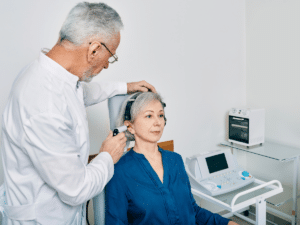
Thorough: Dr. Esca takes a detailed case history, asking about your symptoms, lifestyle, noise exposure, and medical background.
Comfortable and painless: You’ll sit in a quiet room or sound booth, wearing soft headphones
Precise: Several types of tests are used to pinpoint the type and degree of hearing loss. These may include:
Pure-tone testing to measure the softest sounds you can hear at different pitches
Speech audiometry to see how well you understand words at various volumes
Immittance/tympanometry to assess eardrum and middle-ear function
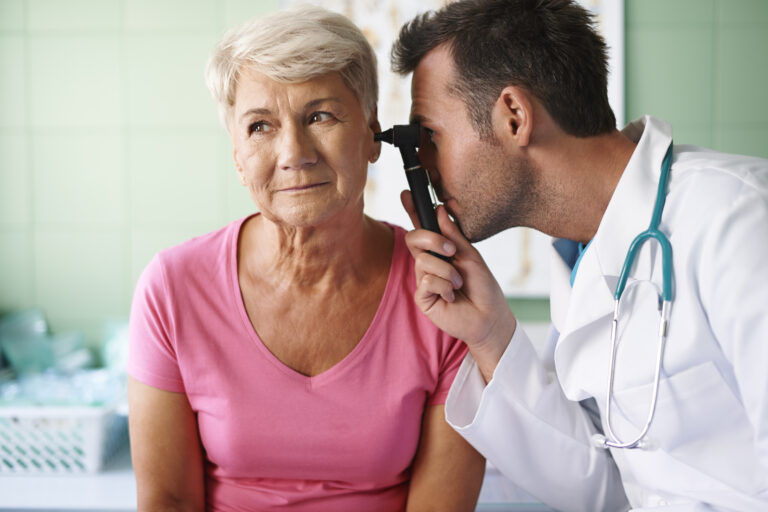
Once the testing is complete, Dr. Esca reviews your results, explains what they mean for your everyday hearing, and discusses the best options, whether that’s monitoring, hearing protection, hearing aids, or a medical referral if needed.
This is more than a quick hearing screening. It’s a comprehensive audiology exam tailored to your specific concerns and communication needs.
How Is a Hearing Screening Different from a Full Hearing Evaluation?
You’ll see both terms, hearing screening and hearing evaluation, and they’re not the same thing.
A hearing screening is a quick pass/fail check. You either meet a basic hearing threshold or you don’t. Screenings are useful as a first filter, but they don’t diagnose anything.
A hearing evaluation (what Listen Hear Diagnostics offers) is a full diagnostic work-up performed by a doctorate-level audiologist. It measures how well you hear across a range of pitches, how clearly you understand speech, and how your middle and inner ear are functioning.
If you’re already noticing signs of hearing loss, like the ones above, a comprehensive hearing evaluation is the smarter choice. It doesn’t just answer “Do I have a problem?” It answers “What exactly is going on and what can I do about it?”
What Does a Hearing Aid Actually Do?
Many people think hearing aids just make everything louder. Modern devices do far more than that.
When you work with a licensed audiologist like Dr. Emily Esca, hearing aids are selected and programmed based on detailed test results and your real-world listening needs.
Today’s hearing aids can:
Amplify specific frequencies you’re missing, rather than blasting all sound.
Reduce background noise and focus on speech, especially in restaurants and group settings.
Automatically adjust to different listening environments, quiet at home, noisy outdoors, busy meetings.
Stream calls, music, and TV directly from your smartphone or compatible devices.
Offer rechargeability, so you don’t have to deal with tiny batteries.
Stay discreet, with slim, modern designs that sit comfortably behind or in your ear.
At Listen Hear Diagnostics, your hearing aid journey doesn’t end at the fitting. You’ll have follow-up visits for fine-tuning, cleaning, and long-term support so your devices keep working optimally as your listening environments and needs change.
Why Choose an Audiologist in White Plains Instead of a Big-Box Store?
You can buy amplifiers and over-the-counter devices almost anywhere now. But there’s a reason patients in and around Westchester county choose Listen Hear Diagnostics:
You work directly with our audiologist, Emily M. Esca, Au.D., who founded Listen Hear Diagnostics to provide personalized, precision-based hearing care.
The practice offers full diagnostic testing, hearing aid selection and fitting, tinnitus evaluation, and long-term follow-up care, not just a quick sale.
You get a relationship, not a transaction, ongoing support as your hearing and technology needs evolve.
If you’ve been searching online for “hearing test near me” or “audiologist White Plains,” you don’t need to keep scrolling. You have a dedicated, local specialist right here in White Plains.
Ready to Hear Clearly Again? How Do You Schedule a Hearing Test in White Plains?
If even a few of these nine signs of hearing loss sounded uncomfortably familiar, the next step is straightforward: get your hearing checked.
Here’s what to do now:
Schedule a hearing test at Listen Hear Diagnostics online or by phone.
Plan for about an hour for a full comprehensive audiology exam with Dr. Emily.
Bring a family member or close friend if you’d like another set of ears for the discussion.
Leave with clear results, honest answers, and a customized plan for your hearing health.
You don’t have to wait until communication breaks down, relationships are strained, or you’re avoiding the activities you enjoy. Early testing gives you options and keeps you in control.
If you’re ready to stop guessing, stop saying “What?” all day, and start hearing with confidence again, book your appointment with Dr. Esca at Listen Hear Diagnostics in White Plains today. Your future conversations, connections, and quality of life are worth that one simple step.
If you’ve recently been diagnosed with hearing loss, or you’re helping a loved one navigate hearing care, you’ve probably run into this question: Why do