If you wear hearing aids (or you’re shopping for your first pair), battery choice can feel like a small detail, right up until the day your devices die halfway through a conversation, a meeting, or dinner with friends. Then it becomes very real, very fast.
Today’s hearing aids typically use one of two power options:
Disposable zinc-air button batteries which you replace every few days to a couple of weeks.
Rechargeable built-in batteries (most commonly lithium-ion) you charge daily, like a phone.
So which is better? The honest answer is: it depends on your lifestyle, your hearing technology needs, and your typical day-to-day routine. Below, I’ll break it down in practical terms, runtime, cost, convenience, and travel, so you can choose confidently and avoid nasty surprises.
And if you’re looking for a personal touch in helping to match a battery type to the right hearing aid style and features, that’s exactly what Listen Hear Diagnostics is here for: personalized care and solutions tailored to you.
What’s the difference between rechargeable and disposable hearing aid batteries?
Disposable hearing aid batteries are small zinc-air “button” cells. You peel off a little tab, place the battery in the aid, and replace it when it’s depleted. Those batteries come in standard sizes (commonly 10, 312, 13, and 675) and those sizes are “numbered and colored universally,” which helps you buy the right one every time.
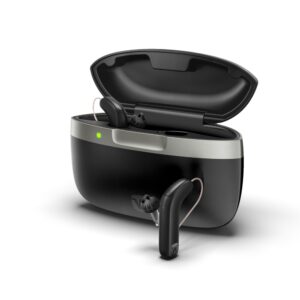
Rechargeable hearing aids contain a built-in battery (often lithium-ion) and charge on a dock or in a charging case, typically overnight. Lithium-ion rechargeables became a major part of the hearing aid market starting around 2016, and they’ve grown quickly since then.
How long do disposable hearing aid batteries last?
Disposable battery life can vary quite a lot because it depends on:
Your hearing aid style and power level
How many hours you wear them daily
How much you stream audio (calls, music, TV)
Environmental factors like humidity and temperature
As a broad range, standard hearing aid batteries can last “anywhere from 3 to 22 days,” depending on device type, capacity, usage, and streaming.
Two details that matter more than most people realize:
That colored tab isn’t just branding. It’s a protective seal. Once you remove it, the battery begins discharging, so don’t peel tabs early “to get ready.”
Your battery can seem fine… until it isn’t. Zinc-air batteries tend to hold steady voltage and then drop off quickly, so “I was fine an hour ago” is common.
How long can rechargeable hearing aids last on a charge?
Rechargeable performance depends on streaming and power demands, but modern devices are designed to get most people through a full day.
For example, Phonak’s lithium-ion documentation notes that users with moderate hearing loss and a standard receiver can see about 24 hours of wearing time with up to 80 minutes of streaming, and around 20 hours with 5 hours of streaming.
That’s not a promise for every brand or every hearing profile, but it’s a useful benchmark: if you’re a full-day wearer and you stream a lot, rechargeable can still keep up, as long as the device and battery are a good match for your needs.
How long does a rechargeable battery last before it needs service?
This is a question many people forget to ask until it’s too late.
Rechargeable hearing aids usually have a sealed internal battery that will eventually degrade and require service or replacement through the manufacturer or clinic. In Phonak’s lithium-ion “fast facts,” they note battery performance is designed to last up to about 4 years, with potential performance decrease after that point.
In plain language: rechargeables are very convenient day-to-day, but you’re trading regular battery swaps for the reality that, down the road, the battery is a component that will need professional service.
Which option is easier if you have dexterity or vision challenges?
For many patients, this is the deciding factor.
Disposable batteries are tiny. Handling them, especially size 10, can be frustrating if you have arthritis, neuropathy, tremors, reduced sensation in your fingertips, or low vision. Rechargeables eliminate most of that: you simply drop the aids into a charger.
That’s one reason audiology organizations often point out that people with dexterity issues may prefer rechargeable options.
If replacing batteries already feels like an obstacle, it’s not a minor inconvenience, it’s a barrier to consistent use. And inconsistent use is one of the fastest ways to make you feel like your hearing aids “aren’t helping.”
How do streaming and advanced features change the battery equation?
Modern hearing aids do more than amplify sound. They have the ability to run:
Bluetooth streaming
Noise reduction and speech processing
Directional microphone systems
App connectivity and environmental classification
Those features are great, and they also draw additional power.
If you love streaming calls or TV audio, rechargeable devices can be a strong fit because you’re not “spending” a disposable battery faster than expected. However, you do want realistic expectations about daily runtime (and you want an audiologist to program your devices so performance and battery drain are balanced appropriately).
What does “cheaper” really mean over time?
Disposable batteries often feel cheaper because the cost is spread out: a pack here, a pack there.
Rechargeables can feel more expensive because the cost is up-front, bundled into the device and charger. But over time, rechargeables will reduce recurring purchases of disposable batteries.
Here’s the practical way to think about cost:
If you wear hearing aids all day, every day, disposable batteries are a recurring operating cost.
If you wear hearing aids occasionally, disposable may be more cost-efficient because you’re not paying for a rechargeable system you don’t fully use.
Also, your time has value. If you’re changing batteries frequently and it’s a hassle, the “cheapest” option on paper may not be the cheapest option in real life.
Which option is more reliable for travel and emergencies?
This is where the trade-offs get interesting.
Disposable batteries travel well because you can carry spares and replace them instantly. No outlet needed. If you’re camping, traveling internationally with unpredictable charging access, or simply the type who never wants to worry about bringing a charger, disposable has obvious advantages.
Rechargeable batteries travel well when your routine is stable (hotel, home, cruise cabin) and you can reliably charge nightly. But for this to be effective you do need to think ahead:
Bring the charger with the necessary cables and plugs
If your charger uses a case that must be plugged in, plan for that
Consider power adapters for any international travel
A smart compromise some patients use: even with rechargeables, keep a small “hearing toolkit” on-hand, charger, cable, and (if applicable) a portable power bank.
Do disposable batteries still make sense?
Yes, especially for certain profiles.
Disposable batteries are still a solid choice if you:
Want instant swaps without the need for a charging routine
Spend long periods away from reliable power
Prefer a simpler device ecosystem
Don’t want to think about long-term rechargeable battery service
And disposable is still very common across hearing aid styles and power levels. Major manufacturers continue to support it because it works.
Starkey’s patient battery guide also emphasizes practical care habits that matter with disposables, like opening the battery door at night to reduce moisture and protect the device.
Are rechargeable hearing aids “better”?
Not automatically, but many of the newest product lines are built around rechargeables first.
Rechargeable hearing aids are often paired with modern feature sets and accessories. That said, there are excellent disposable-battery devices too. Battery type alone doesn’t determine sound quality.
What determines success is the fit, verification, programming, follow-up care, and matching features to your daily environments, work meetings, restaurants, family gatherings, phone use, tinnitus needs, and so on.
Listen Hear Diagnostics explicitly focuses on individualized needs and a personalized hearing aid journey, with routine checkups to keep your devices working for you, not the other way around.
What can extend the battery life of my hearing aids (rechargeable or disposable)?
Don’t remove the tab until you’re ready to use the battery (it starts discharging once the seal is removed).
Open the battery door at night to let moisture escape.
Avoid storing batteries or your hearing aids in extreme hot/cold environments.
Keep spare batteries away from coins/keys (metal contact can discharge them).
If you use rechargeable batteries:
Make charging a part of your nightly routine.
Don’t leave devices or changing cases in hot cars or near heat sources.
If you stream heavily, you should expect a shorter daily runtime, plan accordingly (and ask your audiologist to help optimize your settings).
What questions should you ask before choosing?
Answer these questions and bring them to your next appointment, they can help lead you and your audiologist to the right answer more faster:
How many hours per day should I be wearing my hearing aids?
How much streaming do I realistically do each day?
Do I have dexterity/vision issues that make battery swaps difficult?
Do I travel often or spend time away from reliable charging?
If I choose rechargeable, when should I plan to bring them back for battery service?
Which hearing aid styles and power levels fit my hearing loss best, and which battery types do those styles support?
Working with your audiologist, you should be able to translate your daily life into a power plan that works predictably.
Ready to choose the battery option that fits your real life?
Battery choice isn’t just about convenience, it’s about consistency. The best hearing aid in the world won’t help you if it’s dead, uncomfortable to maintain, or constantly running out of power before your day ends.
At Listen Hear Diagnostics, Dr. Emily M. Esca built the practice around spending the time needed to understand individual needs and personalize the hearing aid journey. If you want a recommendation that’s based on your hearing, your lifestyle, and your priorities, not a one-size-fits-all answer, schedule a visit.
If you’ve shopped for hearing aids, or even just started researching, you’ve probably noticed something: most brands promise the same outcomes. Clearer speech. Better hearing
If you’ve recently been diagnosed with hearing loss, or you’re helping a loved one navigate hearing care, you’ve probably run into this question: Why do
Over‑the‑counter (OTC) hearing aids are everywhere now, from pharmacies to big‑box stores and online carts. Meanwhile, prescription hearing aids keep advancing with smarter chips and